
Creative Practice, Sustainable Business:
HOW THE ART STARTUP CHALLENGE TURNS ARTISTS INTO ENTREPRENEURS
When artists are given the tools, network, and stage to treat their craft as a business, they don't just grow their own livelihoods — they help build a stronger local economy.
the partner
Chilliwack Arts Council champions a vibrant, connected arts community in Chilliwack, BC — supporting local artists through programming, advocacy, and space to grow. Working with Community Futures South Fraser, an organization dedicated to strengthening small business and economic development across the region, the two organizations came together to offer a program around a shared belief: emerging artist-entrepreneurs need more than talent to build sustainable creative businesses — they need business skills, mentorship, and community.
the challenge
Artists are often trained in their craft but rarely in the business of their craft — pricing, marketing, pitching, and building a sustainable practice. Without accessible, arts-specific business support, many talented emerging artists in Chilliwack struggled to turn their creative work into viable livelihoods.
Chilliwack Arts Council engaged Thrive & Connect Community Consulting to facilitate the second year of their cohort-based accelerator. The program focused on building community in the room, helping artists form real relationships with one another and equipping them with the tools they needed to succeed — through curriculum that responded to the real needs of the cohort rather than a rigid, one-size-fits-all template. The Art Startup Challenge is a 2-month program to equip 15 emerging artists and creatives with essential business development skills. After 8 intensive weeks in training, artists pitch their business ideas to a panel of local, industry judges for a chance at a cash prize.
goals
Equip emerging artist-entrepreneurs with practical business skills — from pricing and marketing to pitching and planning
Build a genuine cohort community where artists support and learn from one another
Establish a repeatable, sustainable program model that Chilliwack Arts Council and Community Futures South Fraser can run year over year
collaborators
the groundwork for community building
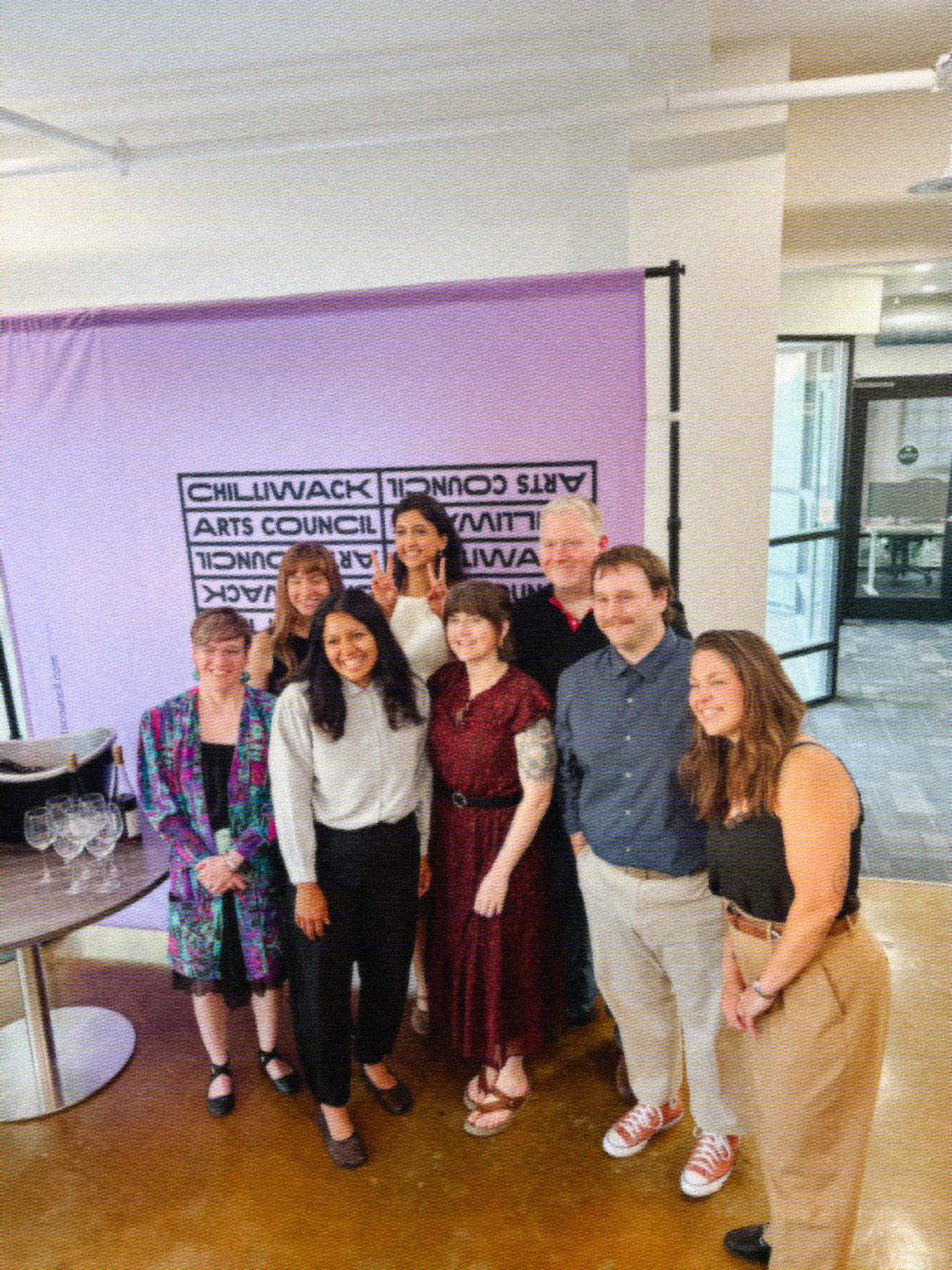
The Art Startup Challenge was built on the belief that investing in artists is investing in the local economy — and that starts within the cohort itself. Relationships formed between people in the room turned into real, paid work after the program ended: one participant was engaged to photograph a community event, referrals within the group led to booked gigs and commissions, and a request to one of the guest speakers led to his wife — also an artist — being hired for a community project. None of these were planned outcomes — they were what happens when artists are given real space to build trust and relationships with one another.
As one participant, Jasmine-Hope, put it: "I came into this not having any clue that there was truly quite a big space in Chilliwack for artists to thrive." Another shared that the program was "a very dignifying experience that helped [me] feel more legitimate as an emerging artist."
That same investment carried onto a public stage. At Final Pitch Night, five finalists pitched in front of a panel of industry judges, a live community audience, and a livestream to the world via the Community Futures South Fraser YouTube page — offering a look into how much creative entrepreneurial talent exists in Chilliwack. The judges' interest extended well beyond the top five: some have since reached out to participants hoping to hire artists whose pitches they'd heard, regardless of whether they placed.
our process
As Lead Facilitator, my role wasn't to build the Art Startup Challenge — the Chilliwack Arts Council and Community Futures South Fraser had already developed a strong syllabus. My work was to hold the room and offer the tools: creating the relationships, trust, and flexibility that let each artist take what they needed from eight intensive weeks and apply it to their own business, at their own stage.
That meant meeting people where they were, not where a curriculum assumed they'd be. Content was delivered through multiple formats — pre-watch videos, in-session workshops, worksheets, and one-on-one support — so participants could engage with the material in whatever way worked for how they learn best. Some absorbed concepts best live, in discussion; others needed to sit with a video on their own time before it clicked.
That flexibility showed up early. In week one, the co-facilitator introduced a concept that the cohort engaged with far more than the workshop had time for. Rather than let that curiosity go unanswered, we recorded a 10–15 minute deep-dive video on our own time and made it available for anyone who wanted to go further. No one was required to watch it — but the artists who did got to follow their own curiosity as far as they wanted to take it.
That was the philosophy behind the whole program: give people the best possible tools, then put them in the driver's seat. The Art Startup Challenge was never going to hand anyone a business — it was going to hand them what they needed to build one. What each artist got out of it was, in the end, up to what they put in.
“Having Megan facilitate the Art Startup Challenge during our second year made an enormous difference. They immediately understood the program and the needs of the community. Communication with the cohort was seamless from week one — and having them hold that piece meant a lot came off my desk that I would have otherwise been managing myself. The cohort experience was stronger for it, and so was my ability to focus on everything else happening at the Chilliwack Arts Council.”
- Lise Oakley, Executive Director, Chilliwack Arts Council
the impact
Nine artists completed the program having developed a plan for their creative business
Five finalists went on to pitch at the Final Pitch Night
100% of surveyed participants rated the program 4 or 5 stars (out of 5), and every respondent said they'd recommend the Art Startup Challenge to other artists
Relationships built inside the cohort turned into paid work after the program ended, and continues to offer participants opportunities for growth
Judges' interest extended well beyond the top five, with several reaching out to participants afterward hoping to hire artists whose pitches they'd heard
“Megan being the primary cohort leader was huge!!! [...] Megan's leadership in setting up our WhatsApp group/being the point person for all program communication, being part of the one-on-one [session], and making expectations very clear made the eight weeks feel very cohesive." - Cohort Participant
now they thrive
The Art Startup Challenge shows what's possible when artists are given more than information — when they're given trust, relationships, and the space to build a business in their own way. Nine artists graduated this cohort with real plans for their creative businesses, and the connections formed in the room outlasted the program itself: paid work, referrals, and collaborations that are still unfolding.
Brining a dedicated facilitator on for year two of the Challenge meant the cohort experience only got stronger — built on continuity, trust, and a deeper understanding of what this community of artists actually needed. Chilliwack Arts Council and Community Futures South Fraser now have a proven, repeatable program, and a group of artists better equipped to sustain their creative practice for the long term.
At its core, this case study reflects a belief at the heart of Thrive & Connect: that meaningful growth doesn't happen alone. It happens in community — where trust, relationships, and the right tools create the conditions for people to learn, develop, and thrive.